
LEADERSHIP INSIGHTS
What Nature Can Teach Us About Leading Complex Organisations
Originally written by George Perry, January 2021
Updated October 2026
What can elephants, fish, starlings and penguins teach us about leadership? Quite a lot, as it turns out.
In our previous article and accompanying podcast series, we explored what it takes to lead a complex adaptive system. The COVID-19 pandemic brought these challenges into sharp focus, forcing organisations to respond to uncertainty, adapt quickly and rethink traditional approaches to leadership.
As we entered 2021 and began looking towards post-pandemic recovery, one question became particularly relevant: how can leaders create the conditions for people and organisations to adapt successfully?
Although the immediate circumstances have changed, the underlying leadership challenge remains. Organisations continue to operate in interconnected and unpredictable environments, where traditional approaches to control and decision-making are not always sufficient.
Nature provides some fascinating examples.
Elephants: Clear Leadership and Shared Purpose
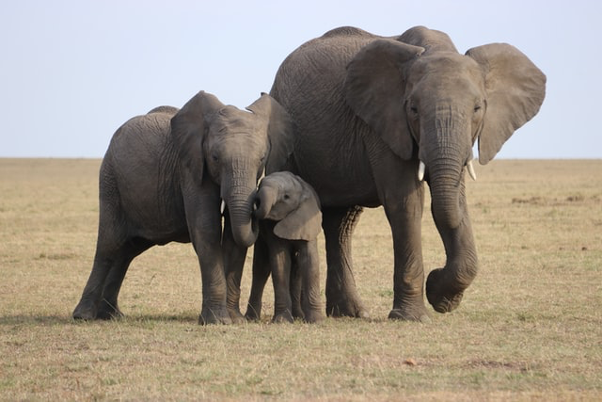
Consider the elephant herd. Elephants make an extraordinary investment in raising their young. African elephants have the longest gestation period of any mammal, lasting approximately 22 months. Calves remain dependent on their mothers for years, while females typically stay with their family herd throughout their lives.
Survival depends on strong social bonds, cooperation and experienced leadership.
Elephant herds are generally led by a matriarch whose experience helps the group locate food and water, recognise danger and protect younger members.
The leadership structure is clear. The herd follows an experienced leader, and the collective purpose is equally clear: survival and the wellbeing of future generations.
This resembles a more traditional organisational leadership model, where responsibility and direction sit with an identifiable leader.
Schools of Fish: Coordination Without a Single Leader
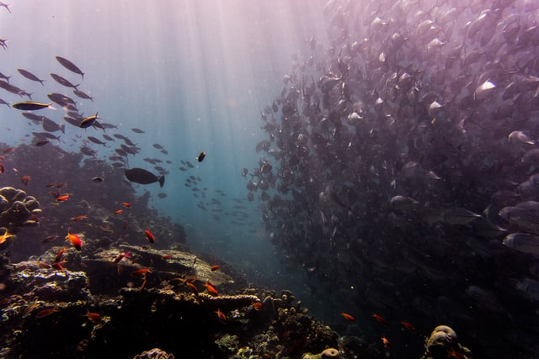
Now consider a school of fish.
We have all seen those remarkable images of hundreds or thousands of fish moving together, twisting and turning in synchrony to create sweeping, shimmering patterns.
This collective movement helps protect fish from predators, while swimming together can also offer energy-saving benefits.
Yet, unlike an elephant herd, there is often no single individual directing the movement.
Instead, coordination emerges through the interactions of individual fish responding to those around them. Fish adjust their direction and distance in response to their neighbours, allowing the school to move as a coherent group.
Leadership, in the traditional sense, is not necessarily required for coordinated action.
This is an example of the self-organising behaviour we see in complex adaptive systems.
Starlings: The Power of Collective Intelligence
Another extraordinary example is the murmuration of starlings.
At dusk, thousands of birds can gather in the sky, creating fluid, constantly changing shapes as they fly together at remarkable speed.
Watching them, it is difficult to imagine how they avoid collisions while maintaining such extraordinary coordination.
Yet their movements are not directed by a single leader. Instead, complex patterns emerge from relatively simple interactions between individual birds.
For organisations, the lesson is important: effective coordination does not always require centralised control.
Under the right conditions, individuals responding intelligently to one another can create an effective collective response.
Penguins: Cooperation, Adaptability and Survival
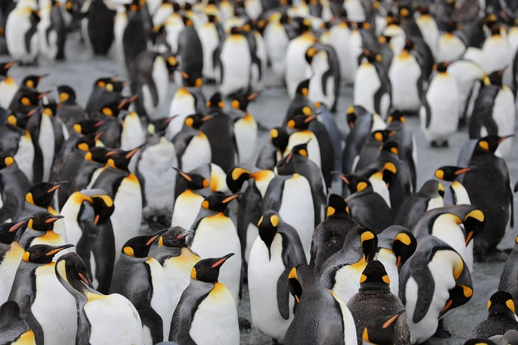
Emperor penguins provide another fascinating example of collective behaviour.
During the Antarctic winter, male emperor penguins incubate their eggs for approximately two months, balancing them on their feet beneath a protective brood pouch.
Throughout this period, they endure extreme temperatures and prolonged periods without food.
To survive, the penguins gather in tightly packed huddles, conserving warmth and protecting one another from the harsh environment.
Their commitment to protecting the next generation is extraordinary.
If you're anything like me, much of this will sound familiar from the opening minutes of the animated film Happy Feet, which is where most of my in-depth penguin knowledge comes from!
I still haven't discovered how to get penguins to sing my favourite Queen songs or tap dance to Boogie Wonderland. If they could put on a complete variety show, I'd be ready to declare them the smartest creatures on Earth. Although, frankly, they're already doing a pretty good job of impressing me.
Sharing the Burden: A Lesson in Collective Responsibility
What makes penguin huddles particularly interesting is how they redistribute warmth and exposure to the cold.
When Antarctic temperatures fall to around -40°C, sharing body warmth becomes essential. But who gets the benefit of standing in the middle, and who has to endure the freezing conditions at the edges?
It turns out that the penguins have developed a surprisingly fair approach.
Rather than remaining in fixed positions, small movements ripple through the group, gradually reorganising the huddle and allowing individuals to move between different positions.
You can see this fascinating behaviour in this video of a penguin huddle. And I imagine all that shuffling helps keep the blood flowing too, even if the steps are rather more restrained than anything you'd see in Happy Feet.
There is no obvious individual directing every movement. The group adapts through collective behaviour.
The lesson for leadership is that resilience can emerge when individuals understand their shared purpose and respond to changing conditions together.
What Does This Mean for Leadership?
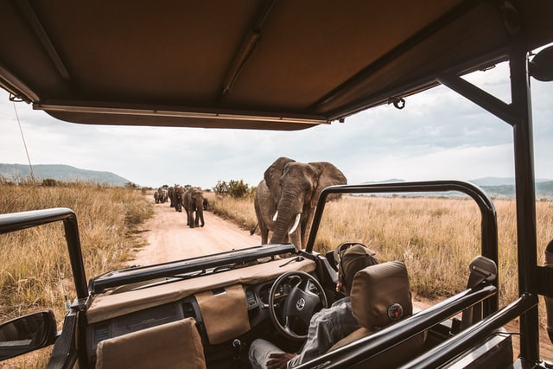
These examples illustrate two different ways of understanding leadership.
The elephant herd represents a more traditional, hierarchical approach, with an identifiable leader providing direction.
Schools of fish, starling murmurations and penguin huddles demonstrate how effective collective behaviour can emerge without a single individual controlling every action.
In our earlier discussion, we explored this contrast through the ideas of Newtonian thinking and complexity.
On the one hand, we have the more traditional, Newtonian approach illustrated by the elephants. On the other, we have the self-organising behaviour of the fish, starlings and Mumble Happy Feet – I mean to say, penguins!
The important point is not that one approach is right and the other is wrong. Rather, leaders need to recognise the nature of the system they are leading and adapt their approach accordingly.
Leading an individual team may require different behaviours from leading an entire organisation operating within a complex and rapidly changing environment.
Leading the System, Not Controlling Every Decision
When leading a complex adaptive system, the challenge is not to abandon everything we know about leadership.
It is to develop additional capabilities and recognise when different approaches are needed.
Leaders must understand the wider system, the relationships within it and the potential consequences of their decisions.
A decision made in one part of an organisation can have unexpected effects elsewhere. This is closely related to the idea of the butterfly effect, which we explored in the previous article.
Rather than attempting to control every interaction, leaders should focus on creating the conditions in which people can make good decisions and respond effectively to change.
Purpose Matters More Than Ever
One of the most important responsibilities of a leader in a complex adaptive system is to establish a clear and meaningful purpose.
This goes beyond setting a vision or defining organisational targets.
It means helping people understand why the organisation exists, what it is trying to achieve and how their individual contributions connect to that wider purpose.
Leaders must also establish clear boundaries for acceptable behaviour and provide regular feedback.
Within those boundaries, individuals and teams need the freedom to respond, adapt and make decisions without unnecessary interference.
Excessive micromanagement can undermine the very adaptability that complex organisations need.
Four Ways to Lead a Complex Adaptive System
The lessons from nature offer four practical principles for leaders who want to build more adaptable and resilient organisations.
1. Get Out of the Way
Give people the tools, trust and freedom to make decisions rather than making every decision for them.
2. Provide a Clear Sense of Purpose
Help everyone understand the direction of travel and why their contribution matters.
3. Establish Clear Boundaries and Provide Feedback
Set simple expectations for behaviour and create regular opportunities for learning and adjustment.
4. Energise the System
Encourage enthusiasm, motivation and positive relationships. Your energy and behaviour as a leader can influence the resilience of the wider organisation.
The Future of Leadership Is Adaptive
Nature reminds us that successful systems do not all operate in the same way.
Sometimes clear, centralised leadership is essential. At other times, adaptability emerges when individuals are trusted to work together towards a shared purpose.
The challenge for today's leaders is to recognise the difference.
By providing clarity of purpose, encouraging autonomy and creating the right conditions for collaboration, leaders can help their organisations become more resilient, responsive and better equipped to navigate uncertainty.
Explore More Leadership Insights
Discover more about adaptive leadership, organisational complexity and the challenges facing today's leaders through LeaderShape Global's Leadership Comes Alive podcast series.
Explore the Podcasts →About the Author
George Perry originally wrote this article in January 2021 as part of LeaderShape Global's exploration of leadership in complex adaptive systems. The article draws on themes discussed in the Leadership Comes Alive podcast series, including adaptability, shared purpose and the role of leaders in enabling effective collective behaviour.